
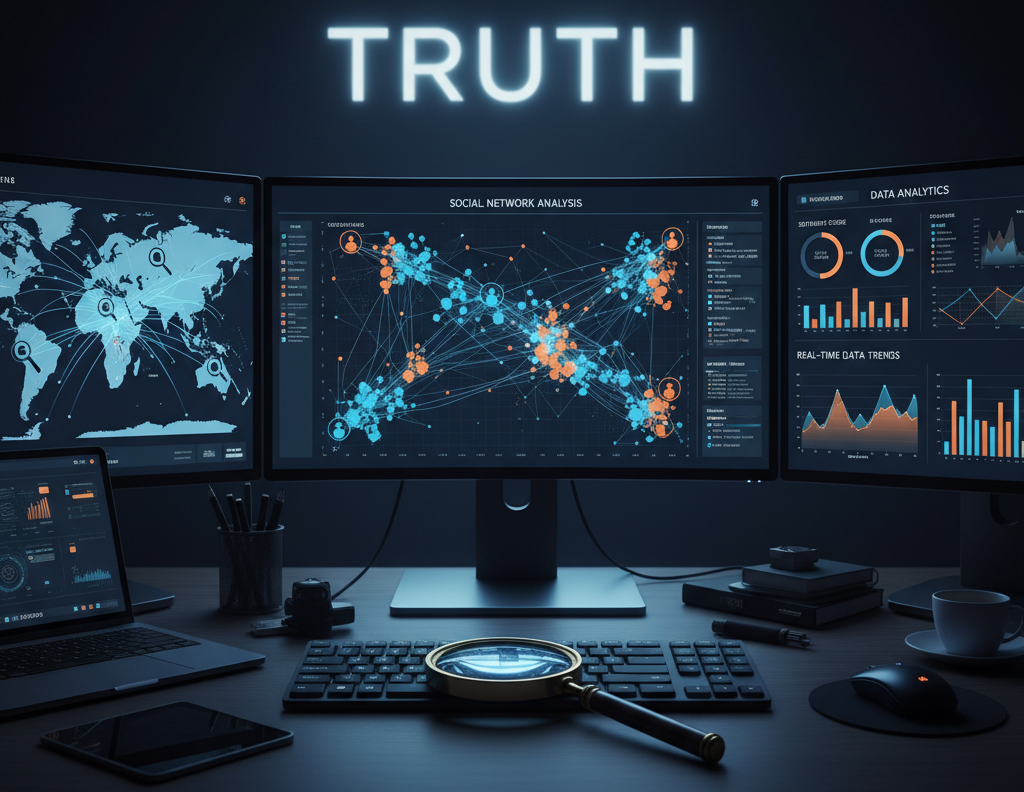
In a world saturated with information, finding the truth can feel like searching for a needle in a digital haystack. Misinformation spreads rapidly, facts are contested, and crucial details are often hidden in plain sight. But what if you had the tools to become a digital detective, capable of piecing together clues from the vast landscape of the public internet?
This is the power of Open-Source Intelligence (OSINT).
OSINT is the art and science of collecting, analyzing, and extracting actionable intelligence from publicly available sources. It’s not about hacking or accessing private data; it’s about knowing where to look and how to connect the dots that others miss. From investigative journalists exposing corruption to researchers identifying disinformation campaigns, OSINT is the key to uncovering the truth in the 21st century.
What Counts as “Open Source”?
The pool of information for OSINT is enormous and constantly growing. It includes:
- The Surface Web: News sites, government records, public company filings, and annual reports.
- Social Media: Posts, photos, connections, location check-ins, and metadata from platforms like Facebook, Twitter, LinkedIn, Instagram, and TikTok.
- Public Data: Court records, property deeds, business licenses, and census data.
- Digital Content: Images, videos, and audio files, which contain hidden metadata (like time, date, and GPS coordinates).
- Maps and Satellites: Google Earth, satellite imagery, and street view for verifying locations and changes over time.
- Online Communities: Forums like Reddit and 4chan, blog comments, and review sites.
How OSINT Uncovers the Truth: Real-World Techniques
So, how does this work in practice? Here are a few powerful ways OSINT investigators piece the puzzle together.
1. Verifying Images and Videos
A viral image or video can spark outrage or shape public opinion. But is it real? OSINT analysts use techniques like:
- Reverse Image Search: Tools like Google Lens or Yandex Images can find where else an image has appeared online, often revealing it was taken out of context or is years old.
- Analyzing Metadata: Photos often contain EXIF data, which can reveal the precise location, date, and device used to take the picture.
- Cross-Referencing with Maps and Weather: Does the background match the claimed location? Does the weather in the video match the historical weather data for that day and place?
2. Mapping Digital Footprints
Every one of us leaves a trail of digital breadcrumbs. OSINT helps follow that trail.
- Social Network Analysis: By mapping out connections, friends, and interactions on social media, investigators can identify key players in a network, from criminal organizations to influence operations.
- Username Tracking: People often reuse the same username across different platforms. Finding a username on a forum, a gaming site, and a photo-sharing site can build a comprehensive profile of an individual’s interests and activities.
3. Investigating People and Organizations
Whether it’s for due diligence or a deep dive investigation, OSINT provides a starting point.
- Public Records Search: Accessing court documents, business incorporations, and property records can reveal histories, affiliations, and assets that someone might want to keep hidden.
- 10 websites that help to get public records.
- Archive Services: Tools like the Wayback Machine allow investigators to see what a website looked like in the past, uncovering deleted content or changed statements.
Real-World Impact: OSINT in Action
The power of OSINT isn’t theoretical. It has been pivotal in some of the most important investigations of our time:
- Bellingcat: This investigative collective famously uses OSINT to uncover truths in conflict zones. They have identified the perpetrators of chemical weapons attacks and uncovered the details behind the downing of Malaysia Airlines Flight MH17, all using social media, satellite imagery, and public data.
- Journalistic Investigations: Reporters use OSINT to hold the powerful accountable, verifying whistleblower documents, tracking illicit financial flows, and exposing human rights abuses.
- Uncovering Misinformation: Researchers use OSINT to track the origins of fake news stories and identify the coordinated networks of accounts that spread them.
The Core Principle: A Methodical Approach
Uncovering the truth with OSINT isn’t about a single “gotcha” moment. It’s a methodical process of:
- Asking the right questions.
- Gathering data from multiple, independent sources.
- Corroborating evidence to build a consistent and verifiable story.
In an age where truth can feel malleable, OSINT provides a rigorous, evidence-based methodology to separate fact from fiction. It empowers ordinary people, journalists, and researchers to be active seekers of truth, using the digital world not just as a source of noise, but as a tool for clarity and accountability.
The truth is out there. You just need to know how to look.